Skip to content
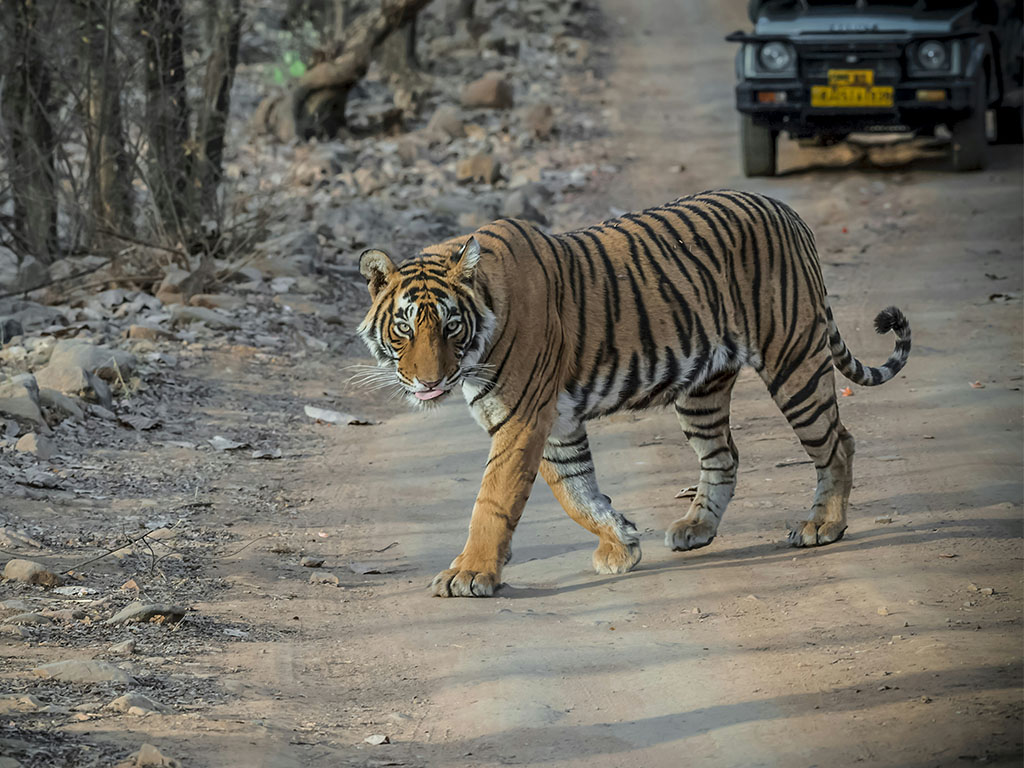
A Bengal tiger resting near the ruins of Ranthambore Fort at golden hour
Destination I / VEastern Rajasthan

Ranthambore

Tiger country, at close range. Dry forests, old ruins, and one of India's densest tiger populations — a week here, done right, is a rare thing.

Primary Wildlife
Bengal Tiger
Open Season
Oct — Apr
Ideal Stay
3 — 4 Nights
01Overview

Ranthambore sits in eastern Rajasthan, a day's drive from Delhi or Jaipur. Its forests are dry, deciduous, and broken by lakes, cliffs, and the ruins of the 10th-century fortress that gives the park its name.

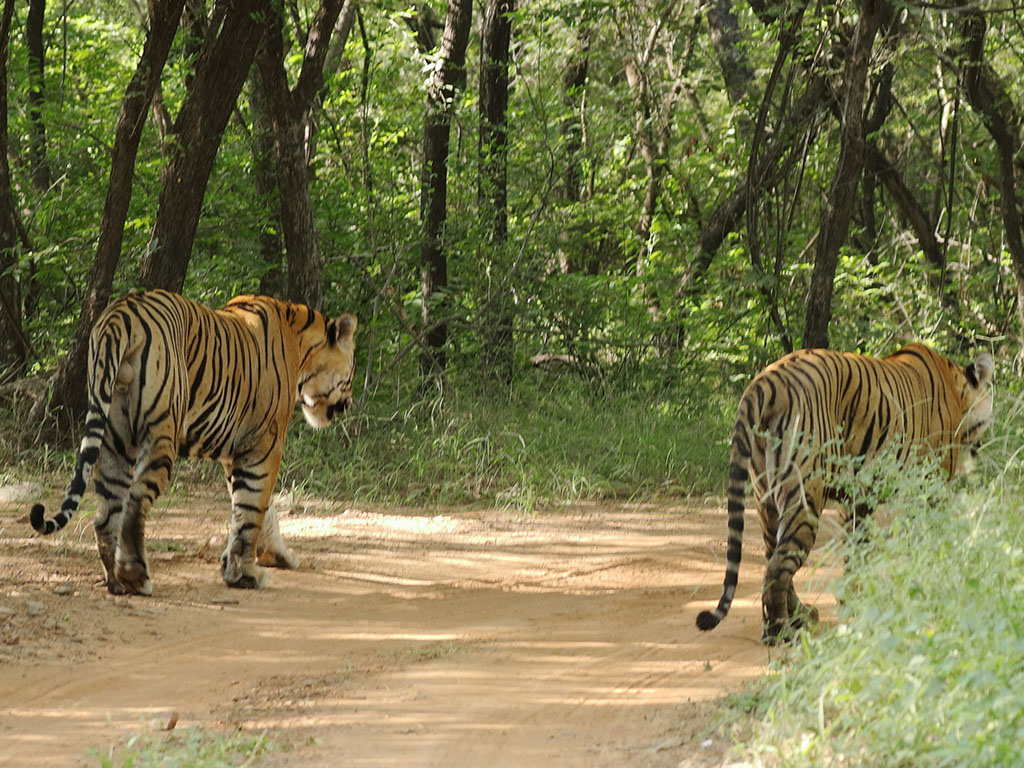
Tigers here have learned to use that architecture. They rest in shaded ruins. They move along lake edges at dawn. They are, by Indian standards, relatively findable — and unusually well-photographed. Ranthambore is where many photographers build their first tiger portfolios, and where many travellers meet their first wild tiger.

It is the most forgiving introduction to India's tiger country, and — for those who stay long enough to move through multiple zones — one of the most rewarding.

Most Ranthambore journeys begin in Jaipur — 3.5 hours by road, 2 hours by rail. Jaipur also contains Jhalana, India's first leopard reserve, and is often the opening leg of a longer wildlife arc.
See Jaipur & Jhalana
02Best Suited For

What Ranthambore
is good for.

  • iTiger sightings with a realistic probability during October–April.
  • iiPhotography — the open terrain and ruins create frames thicker forests cannot.
  • iiiShorter-trip travellers — accessible by rail and road from Delhi, Jaipur, and Agra.
  • ivFirst-time India safari — the most forgiving introduction to tiger country.
03The Zones, Plainly

Ten zones.
Not equally.

Ranthambore is divided into ten zones, each with its own character. Zones are assigned by the forest department by draw. We work with the allocation and plan around it — a well-built itinerary includes multiple zones across multiple drives, not a single zone repeated.

The Quieter Additions
06—07

Newer zones, thicker vegetation. Fewer vehicles, different character — rewarding when you know them.

The Outer Reaches
08—10

Least trafficked. Tigers move through, not always findable — but a different kind of drive when they are.

Our Approach
Multi

We plan for three to four zones across a four-night stay. Zone repetition is the mark of a lazy itinerary.

04When To Come

The season,
month by month.

Oct — Nov
Green & cool
The park reopens after monsoon. Forests still lush, temperatures comfortable. Tiger movement is more spread out — sightings are good but require patience.
Good · Shoulder
Dec — Feb
The cool dry
Strong, consistent sightings. Excellent light for photography. Mornings cold, afternoons warm. The classic Ranthambore season — book early.
Excellent · Peak
Mar — Apr
The hot edge
Hot, and arguably the best for tigers — they concentrate near waterholes. Harder travel conditions, but often the most productive drives of the year.
Exceptional · For the keen
May — Jun
Very hot
Temperatures cross 40°C. Very productive for sightings near water, but physically demanding. Fewer travellers — more focused encounters.
Strong · Specialist
Jul — Sep
Closed
Monsoon. The park closes to allow the forest to breathe and breeding cycles to play out undisturbed.
— Closed —
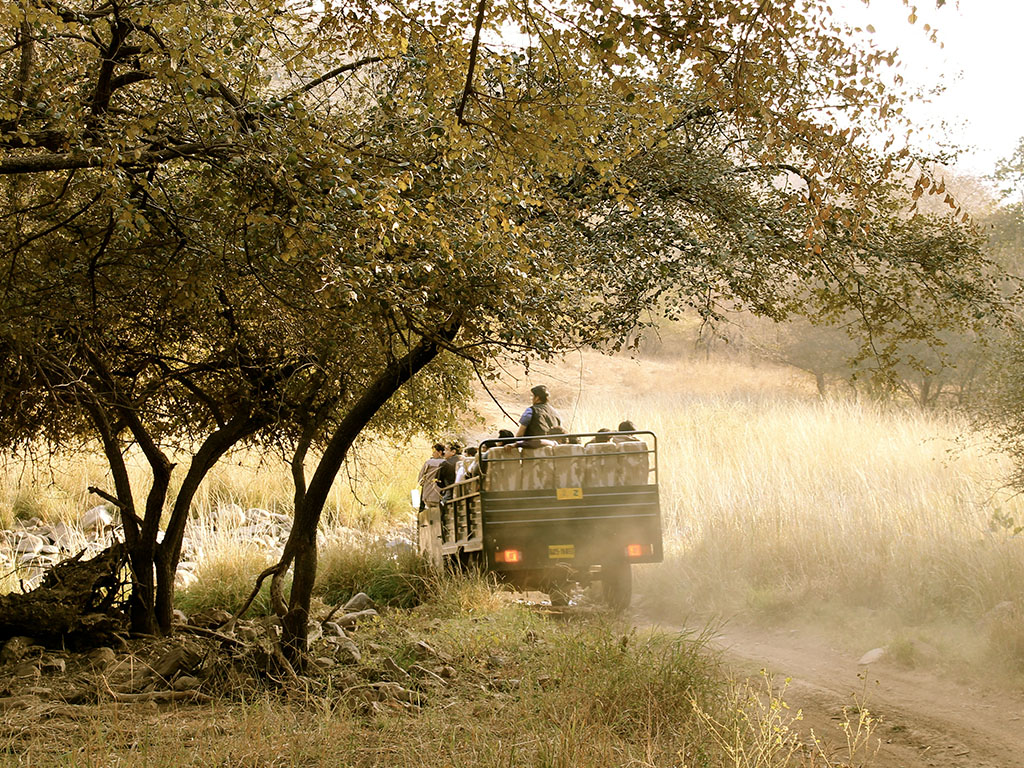
An early morning safari drive in Ranthambore
05A Day in Ranthambore

Into the park,
as the light lifts.

Tea before five. The gate opens with the first grey in the sky. Your naturalist has already read the previous day's board — who was seen, where, and what the night's alarms suggest.

Three to four hours on trail, through whichever zone the draw has given you. Back for a long breakfast, a slow middle of the day — the forest closes until mid-afternoon. Another drive as the heat breaks. By dusk you are at the gate again, often with a story worth telling quietly over dinner.

Read the full experience
06Where You'll Stay

Properties,
chosen.

We work with a considered set of properties around Ranthambore. Each was chosen for what it adds to the journey: location, design, kitchen, and staff who understand wildlife travel. We match the property to the travellers, not the other way around.

An intimate luxury tented camp near Ranthambore
Tented Camp

A tented camp with twelve keys

Intimate, canvas-and-teak, steps from the park gate. Strong naturalist team. Our default for first-time travellers.

A heritage-style lodge with forest views
Heritage Lodge

A heritage lodge on the forest edge

Architecturally distinctive, drawn from Rajasthani hunting lodges. Quieter, more residential in feel. Suits longer stays.

A contemporary forest retreat
Contemporary Retreat

A contemporary forest retreat

Modern design, larger rooms, excellent kitchen. Our choice when travellers want comfort tilted slightly toward the hotel end of the scale.

Partner property names are shared at the journey planning stage. We don't publish a fixed roster — matching property to traveller is part of the craft, and we prefer to do it in conversation.
08Questions

Things
travellers ask.

On a single drive, sightings are common but not guaranteed. Across a three to four-day stay with multiple drives in multiple zones, most of our travellers see tigers — often more than once. Ranthambore has one of the densest tiger populations in India, and the terrain makes the animals unusually findable.

Yes. Ranthambore is one of the most photograph-friendly tiger parks in India. The open terrain and varied landscape — lakes, ruins, cliff faces — produce strong compositions. Private vehicles give you the time and positioning the shot needs.

We recommend six to eight drives across three to four days. One drive is a taster. Four days is a real chance — enough to move through multiple zones and give the forest time to give you something.

Yes. Children who can sit through a two to three-hour drive enjoy Ranthambore particularly — the terrain is varied and the tigers are relatively findable. Minimum ages vary by property; we match the property to the group.

We often do. Ranthambore with Jawai is the classic seven-night journey — tiger country followed by leopard country, two wildly different landscapes. For longer journeys, we add Kumbhalgarh or Sariska as a third, quieter close.

Sawai Madhopur, the town beside the park, is connected by overnight rail from Delhi and Mumbai, or a 3.5-hour drive from Jaipur. We arrange all ground transfers as part of every journey.

Plan a
Ranthambore journey.

Tell us when you'd like to travel, how long, and what you're drawn to. A journey designer will respond within 24 hours.